molecular panel
Antibiotic resistance profile
Also known as ABR, resistance panel
Specification
- Method
- qPCR — CORE-ABR molecular panel Real-time polymerase chain reaction
- Add-on to
- 4 molecular panels
Resistance genes 13
| Gene | Predicts | Agents affected |
|---|---|---|
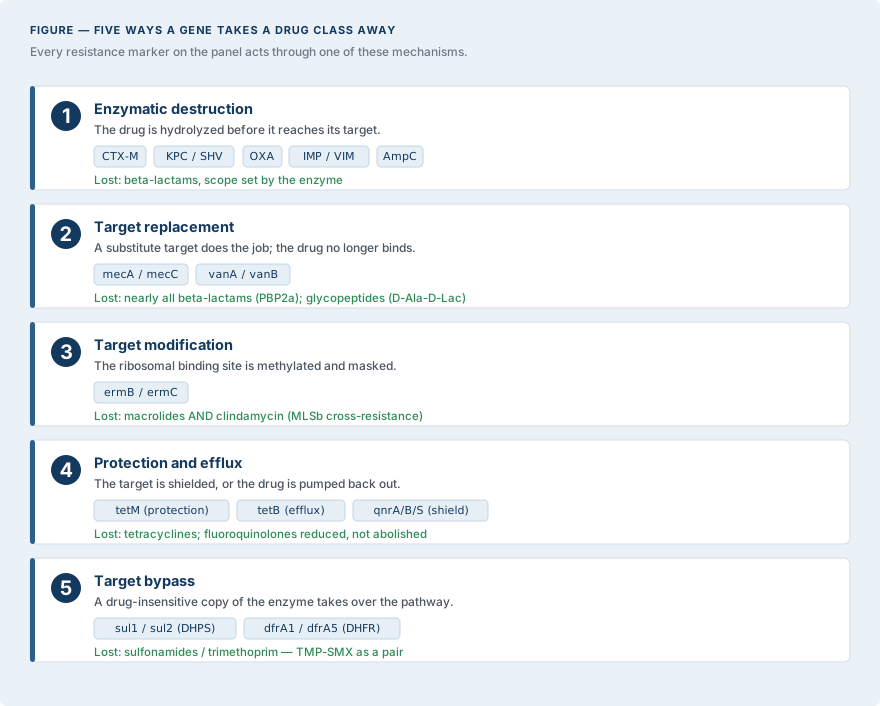
mecA / mecC | Methicillin resistance (MRSA) | Antistaphylococcal penicillins and most cephalosporins; ceftaroline retains activity |
vanA / vanB | Vancomycin resistance | Vancomycin and related glycopeptides |
tetB / tetM | Tetracycline resistance | Doxycycline and minocycline; omadacycline and tigecycline were designed to evade this mechanism and retain activity |
ermB / ermC | MLSb resistance | Macrolides, lincosamides (clindamycin), and streptogramin B |
dfrA1 / dfrA5 | Trimethoprim resistance | Trimethoprim and TMP-SMX |
sul1 / sul2 | Sulfonamide resistance | Sulfonamides |
qnrA / qnrB | Quinolone resistance | Fluoroquinolones |
qnrS | Quinolone resistance | Fluoroquinolones |
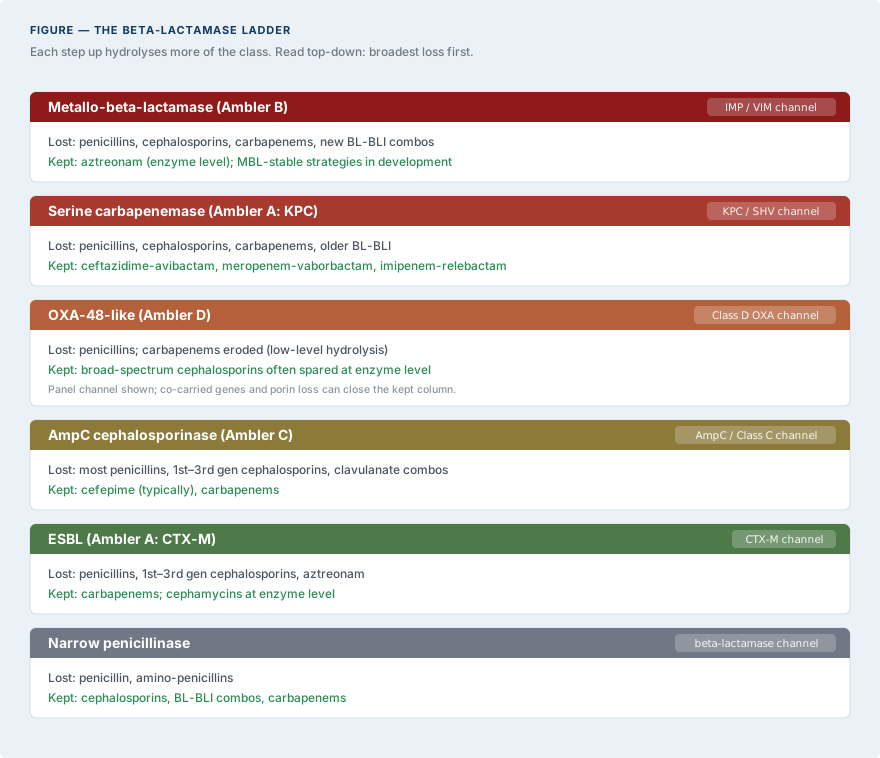
Class A beta-lactamase (CTX-M) | Extended-spectrum beta-lactamase production | Penicillins and most cephalosporins |
Class A beta-lactamase (KPC / SHV) | Carbapenemase or ESBL production | Penicillins, cephalosporins, and (KPC) carbapenems |
Class C beta-lactamase (AmpC) | AmpC cephalosporinase production | Penicillins, cephamycins, and most cephalosporins |
Class D beta-lactamase (OXA) | Oxacillinase production | Penicillins; some variants hydrolyze carbapenems |
Class B metallo-beta-lactamase (IMP / VIM) | Metallo-carbapenemase production | Most beta-lactams including carbapenems; aztreonam is spared |
Detection of a resistance gene predicts resistance. Absence of a detected gene does not establish susceptibility — resistance arises through mechanisms outside the target set, including efflux and porin changes. Molecular detection does not replace phenotypic susceptibility testing.